Guide to Technical Data Verification and On-Site Acceptance Preparation Before Installation and Commissioning of Hydraulic Pump Stations
Technical Data Verification Before Installation and Commissioning
Before the hydraulic pump station enters the installation stage, technicians and procurement teams should first focus on checking the factory documentation delivered with the equipment. A complete set of hydraulic system delivery documents usually includes hydraulic schematics, piping layout drawings, structural assembly drawings, major hydraulic component lists, and product operation and maintenance manuals. For hydraulic power units with electrical control functions, electrical schematics and wiring diagrams must also be verified. If discrepancies are found between drawing versions and actual project requirements during verification, or if key component parameters are unclearly marked, prompt confirmation with the supplier is required to obtain the latest technical specification documents and prevent rework during subsequent installation caused by incorrect references.
During document archiving and on-site preparation, procurement and maintenance personnel can check against the following list: – Hydraulic schematics and piping wiring diagrams (including system working pressure and action execution logic settings) – Overall installation dimension drawings of the hydraulic pump station (including foundation bolt hole locations and oil tank drain port positions) – Product qualification certificates and user manuals for key hydraulic components (such as hydraulic pumps, control valve blocks, oil filters) – Recommended hydraulic oil brand, viscosity grade, and system cleanliness index requirements – Equipment factory inspection qualification report and a copy of the procurement contract technical agreement
On-Site Appearance and Structural Integrity Acceptance
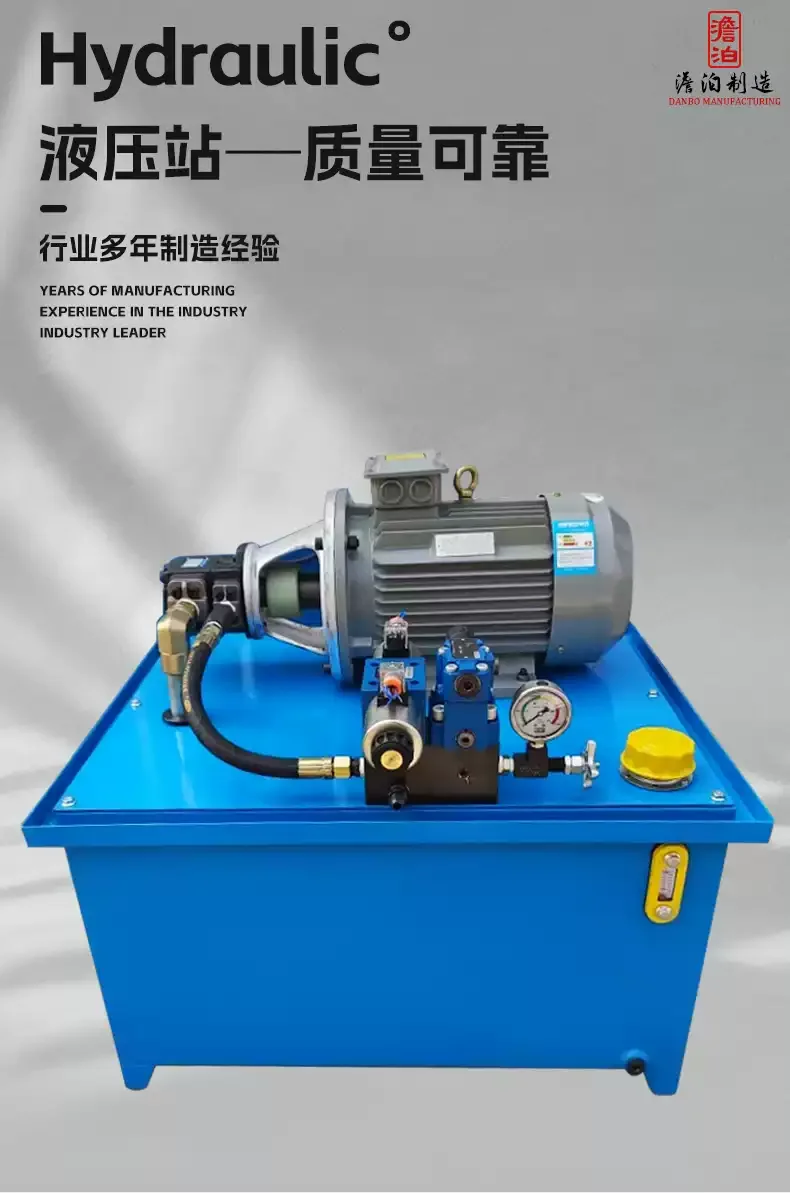
After the hydraulic pump station arrives at the site, arrival appearance inventory and physical acceptance should be organized promptly. Before unpacking, inspect whether the outer packaging is intact to confirm that no overturning, collision, or heavy rain soaking occurred during transportation. After unpacking, perform a visual inspection of the main structure of the oil tank, checking whether the welds are smooth and whether the anti-rust paint coating has peeling or scratches. At the same time, be sure to check whether all exposed piping interfaces, valve block interfaces, and pump suction ports are equipped with sealing plugs. If a sealing plug is found to have fallen off causing exposed ports, inspect whether internal impurities have intruded, and confirm a cleaning plan with the supplier if necessary.
Procurement Specification Verification for Key Components and Accessories
Cross-check all main and auxiliary components on the pump station item by item against the packing list in the box. Focus on verifying whether the rated power and speed of the electric motor, the displacement of the hydraulic pump, and the nominal diameter and pressure rating of the control valve block comply with the technical agreement. Meanwhile, check whether the bending radius, nominal pressure, and fitting thread form of hydraulic hoses match the piping interfaces. If complex piping modifications or connections between old and new equipment are involved on site, professional installation, commissioning, and equipment maintenance consulting services can be requested, where technical engineers will assist in confirming site piping conditions to prevent leakage or pipe burst risks caused by mismatched selection interfaces.
Preparation of Site Foundation and Operating Supporting Conditions
In addition to inspecting the pump station unit itself, foundation preparation at the installation site is equally critical to the smooth subsequent operation of the equipment. The installation foundation must remain level and have sufficient load-bearing strength to reduce mechanical vibration and noise generated during the operation of the hydraulic pump station. Sufficient heat dissipation and operating space should be reserved around the pump station to facilitate subsequent oil level observation, filter element replacement, and routine maintenance. In addition, the voltage and capacity of the site power distribution facilities must meet motor startup requirements, and cooling water lines or heat dissipation air ducts should be properly reserved. For specific cable specifications and power distribution requirements, please strictly refer to the accompanying factory technical manual or confirm with the supplier.
Prepare an enquiry