What Operating Condition Data Is Needed Before Purchasing a Hydraulic Power Unit? A Guide to Selection and Inquiry Preparation
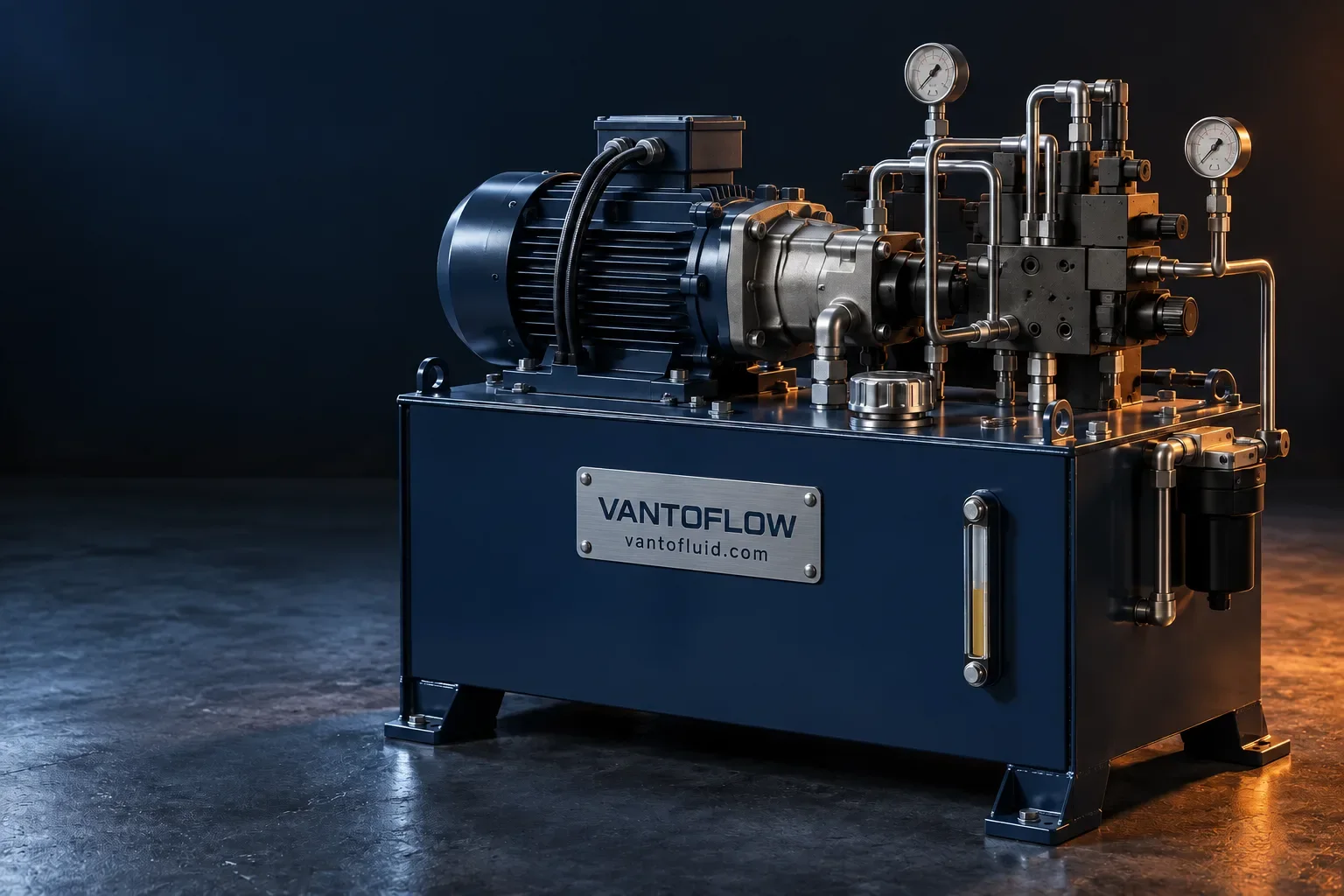
Clarifying Basic Operating Parameters for Hydraulic Power Unit Selection
Before procuring a hydraulic power unit, preparing comprehensive and accurate operating condition data is key to ensuring the stable operation of the equipment later. First, the basic power parameters of the system must be clarified, mainly including operating pressure and flow requirements. The system operating pressure determines the rated pressure level of the power unit and the pressure tolerance selection of the valve manifold, usually requiring clarification of rated working pressure, maximum peak pressure, and continuous operating time; flow requirements directly affect the calculation of hydraulic pump displacement and motor power. At this stage, procurement personnel should summarize the quantity, size, and motion speed requirements of actuators (such as hydraulic cylinders or hydraulic motors) to calculate the system's total flow and maximum instantaneous flow, providing direct data support for hydraulic power unit selection.
Sorting Out Actuator Action Logic and Control Requirements
In addition to basic pressure and flow, the action logic and control method of the hydraulic system are also indispensable technical data during hydraulic power unit inquiry. A clear duty cycle diagram or motion sequence table of the system must be provided, such as sequential actions, synchronous actions, or synchronous pressure-holding requirements in multi-cylinder systems. Regarding control methods, it is necessary to specify whether electromagnetic directional valves, proportional valves, or servo valves are used, as well as whether remote control, PLC automation interfaces, or integrated pressure sensors and other signal feedback components are required. This information directly affects the design complexity of the valve manifold, the configuration of the control cabinet, and the final overall cost.
Evaluating Working Medium Type and Fluid Contamination Control
The choice of working medium has a decisive impact on the selection of hydraulic pumps, seals, and pipelines. Before procurement, the type of hydraulic oil used must be determined, such as standard mineral oil, synthetic ester fire-resistant hydraulic fluid, or water-glycol. Different media have varying requirements for component material matching (e.g., nitrile rubber, fluoroelastomer seals) and corrosion protection. In addition, the target cleanliness level (e.g., ISO 4406 standard) must be defined based on system sensitivity. If the working environment is sensitive to oil temperature, the expected operating temperature range of the medium should also be provided to evaluate whether air-cooled or water-cooled coolers or heaters need to be installed.
Examining Equipment Installation Environment and On-Site Interface Conditions
The physical environmental conditions of a hydraulic power unit often restrict its structural layout and overall dimensions. When preparing data, spatial dimension limits, ventilation conditions, ambient temperature, and special environmental requirements such as explosion-proof, dust-proof, or anti-corrosion needs at the installation site should be included. For example, hydraulic power units used in chemical or metallurgical sites may require explosion-proof motors and corrosion-resistant coatings. Meanwhile, on-site power supply conditions (voltage, frequency, power capacity) and cooling water sources (water temperature, water pressure, flow rate) are key data that must be disclosed during inquiry. Piping interface specifications, orientations, and installation methods should also be checked and confirmed with the supplier in advance.
Standardizing Inquiry Preparation Process and Supplier Communication Points
After collecting the above operating condition data, it can be organized into a standard technical specification for hydraulic power unit inquiries. To avoid design changes caused by mismatched information later, it is recommended to fully provide action cycle requirements, environmental constraints, and interface dimensions to technical personnel during initial communication. Since specific product specifications, supporting component selections, and service scopes vary under different operating conditions, specific power unit configuration plans and performance parameters must be confirmed with the supplier based on actual inquiry results. Preparing detailed operating condition data in advance not only significantly shortens the selection communication cycle, but also effectively improves the accuracy and cost-effectiveness of procurement decisions.
Prepare an enquiry